The Climate Locker Revolution: Secure Storage Solutions for a Sustainable Future
In an era defined by rapid climate change and rising global temperatures, securing our most vulnerable assets—from perishable goods to historical artifacts—has become a pressing challenge. Enter the *climate locker*, a cutting-edge innovation designed to protect items from extreme weather fluctuations, moisture, and other environmental threats. As industries worldwide seek resilient storage solutions, the climate locker stands out as a game-changer.
This article delves into the science, technology, and broader implications of climate lockers. Whether you’re part of the storagewow community or simply curious about sustainable storage, you’ll discover how this advancement redefines security, longevity, and eco-friendliness in modern logistics and conservation efforts.
What Exactly Is a Climate Locker?
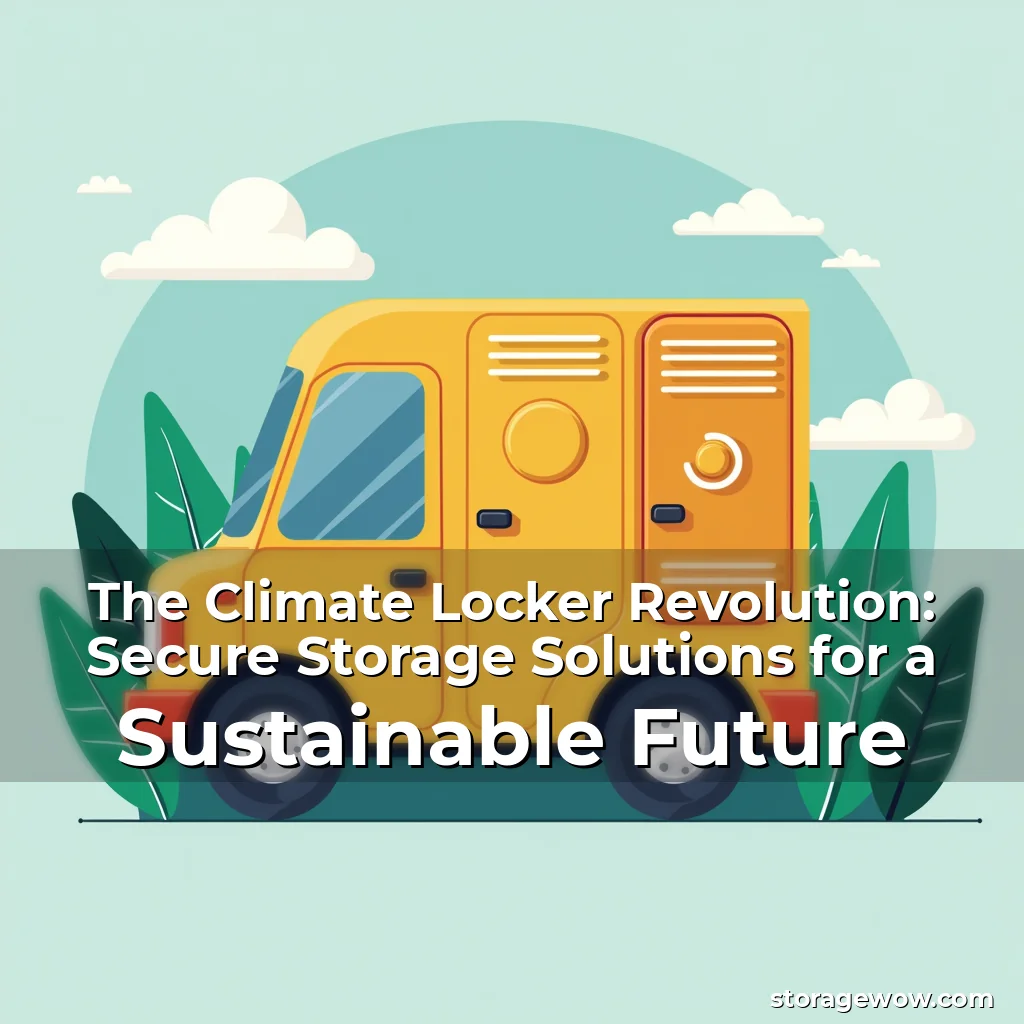
A climate locker is a specialized storage unit engineered to maintain precise environmental conditions, including temperature, humidity, air quality, and light exposure. Unlike conventional storage containers, which offer limited protection against external elements, climate lockers use advanced engineering to
Applications Across Industries
The versatility of climate lockers extends far beyond niche markets. From protecting food supplies in developing regions to preserving critical infrastructure in disaster-prone areas, their utility is vast and growing.
In agriculture, climate lockers help mitigate losses from unpredictable harvest seasons. In urban centers, they enable hyperlocal food distribution networks by extending shelf life and reducing transport dependency. Meanwhile, in healthcare, they secure vaccines and medications requiring strict cold-chain protocols.
- Farm-to-Fork Innovation: Farmers use climate lockers to store produce until market readiness, slashing post-harvest losses.
- Cold Chain Resilience: Hospitals deploy mobile climate lockers to deliver temperature-sensitive drugs to remote clinics efficiently.
- Eco-Conscious Retail: Grocery chains integrate climate lockers into stores, enabling customers to access fresh, locally sourced products daily.
Each industry tailors climate locker configurations to meet unique demands, showcasing the technology’s scalability and adaptability.
Sustainability Meets Security
Beyond functionality, climate lockers play a pivotal role in promoting sustainability. Traditional storage methods often involve excessive refrigeration, chemical preservatives, or single-use packaging—all of which harm the environment. Climate lockers counteract these issues by offering long-term, reusable solutions.
Consider a scenario where a winery uses climate lockers instead of aging wine in subterranean cellars. Not only does this eliminate the need for costly excavation projects, but it also reduces groundwater contamination risks associated with drainage systems. Such innovations align storage practices with green initiatives.
Measuring Environmental Impact
Data reveals that widespread adoption of climate lockers could cut global food waste by nearly 18%, according to a 2023 report by the International Food Policy Research Institute. By stabilizing storage conditions, these lockers prevent spoilage, thereby conserving resources tied to production and transportation.
Moreover, the integration of solar-powered climate lockers in rural communities provides clean energy alternatives. Solar arrays paired with battery storage systems ensure uninterrupted operation during grid outages, reinforcing resilience against climate disruptions.
Challenges in Implementation
Despite their promise, deploying climate lockers isn’t without obstacles. High upfront costs, technical complexity, and the need for skilled personnel to manage systems pose significant barriers, especially for small-scale operators.
Additionally, retrofitting existing storage infrastructures to accommodate climate lockers requires careful planning. Compatibility with legacy equipment and adherence to local regulations add layers of difficulty to the adoption process.
- Financial Hurdles: Initial investments may deter startups or low-income communities from accessing climate locker benefits.
- Maintenance Demands: Regular calibration of sensors and replacement of filters increase ongoing expenses.
- Knowledge Gaps: Operators unfamiliar with climate science risk misconfiguring lockers, potentially compromising stored items.
To overcome these challenges, governments and private entities must invest in subsidies, training programs, and standardized guidelines to democratize access to climate locker technology.
The Role of Innovation in Advancing Climate Lockers
Technological breakthroughs continue to refine climate locker capabilities. Artificial intelligence now enables predictive analytics, forecasting environmental shifts before they occur. Machine learning algorithms analyze historical weather patterns to optimize locker performance preemptively.
Nanotechnology is another frontier driving progress. Researchers are experimenting with nano-coatings that repel water molecules, enhancing moisture resistance in humid climates. Similarly, self-healing polymers applied to locker surfaces repair minor cracks autonomously, prolonging service life.
Smart Integration and Connectivity
IoT-enabled climate lockers communicate via cloud platforms, providing users with live dashboards tracking temperature fluctuations, humidity levels, and energy usage. Remote diagnostics allow technicians to troubleshoot malfunctions without physical inspections, saving time and money.
Furthermore, blockchain technology introduces transparency in supply chain management. Each transaction involving a stored item generates an immutable record, verifying authenticity and handling history—a boon for luxury goods or pharmaceuticals prone to counterfeit infiltration.
Community Initiatives and Global Collaboration
Storagewow and similar communities are instrumental in fostering collective action around climate lockers. Through shared knowledge exchanges, pilot projects, and funding drives, grassroots movements amplify the reach of these technologies.
One notable example is the “Cool Communities” initiative launched by storagewow, which partners with municipalities to install public climate lockers in neighborhoods lacking adequate storage infrastructure. These lockers serve dual purposes: protecting residents’ belongings from climate events and acting as hubs for emergency relief distributions.
International collaborations also accelerate development. The European Union’s Horizon Program funds cross-border research on climate locker efficiency, while African nations leverage partnerships with UN agencies to implement scalable models suited to tropical climates.
Looking Ahead: The Future of Climate Lockers
As climate variability intensifies, the demand for climate lockers will surge. Innovations in quantum computing may soon revolutionize how we model and predict environmental interactions, making climate lockers even smarter and more adaptive.
Meanwhile, circular economy principles will shape new product lines. Manufacturers are exploring biodegradable components and modular designs that allow parts to be upgraded rather than discarded entirely, aligning with global recycling mandates.
The convergence of climate science, engineering, and policy will define the trajectory of climate locker evolution. By prioritizing inclusivity and accessibility, society can harness this technology to build a more resilient world.
Conclusion
Climate lockers represent a paradigm shift in how we approach storage and preservation. Their ability to harmonize security, sustainability, and scientific precision positions them as vital tools in combating climate-induced vulnerabilities.
Whether you’re managing a warehouse, advocating for environmental causes, or simply intrigued by futuristic storage solutions, embracing climate locker technology offers tangible rewards. Join the storagewow community today and explore how these innovations can reshape your storage strategies—and your contribution to a greener planet.