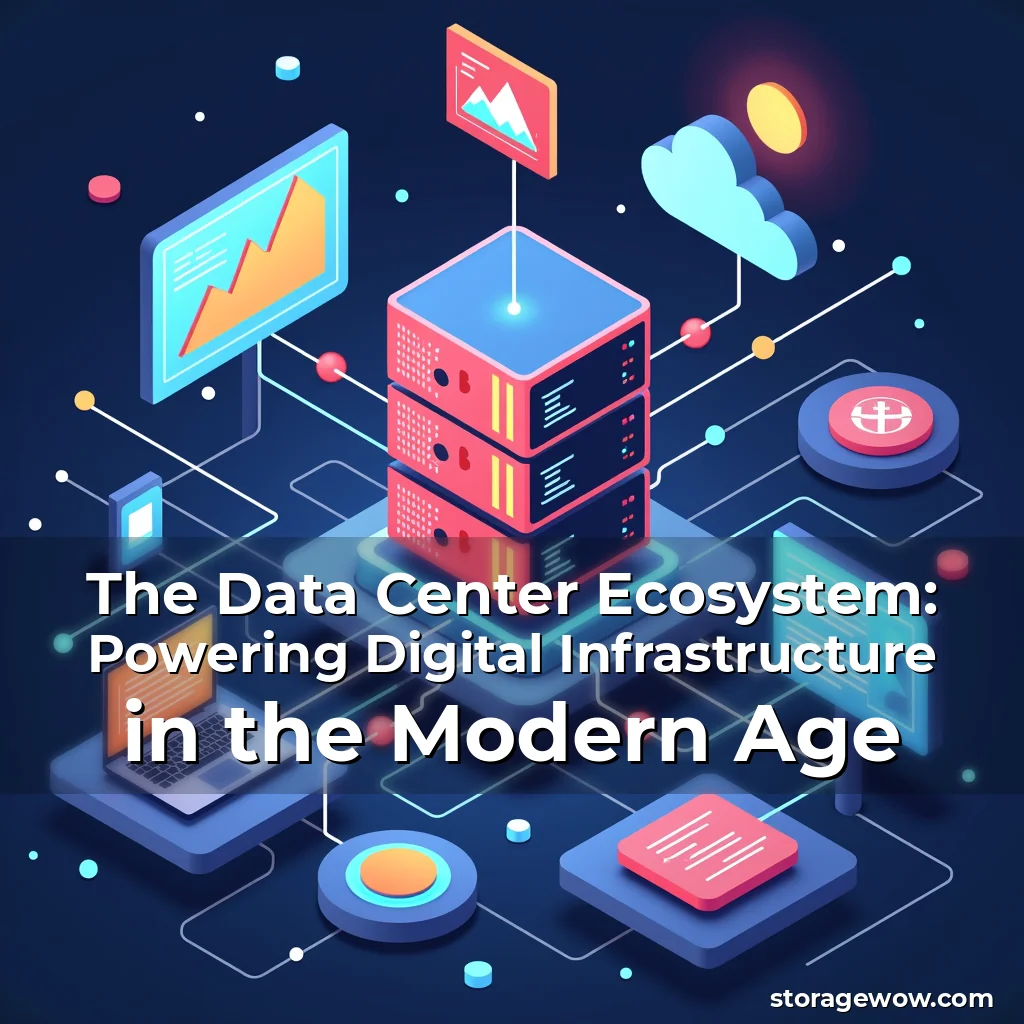
The Data Center Ecosystem: Powering Digital Infrastructure in the Modern Age
In today’s hyper-connected world, data centers are the unsung heroes behind every digital interaction we experience daily. From streaming videos to conducting online transactions, these facilities form the backbone of modern computing infrastructure.
As global demand for cloud services continues to surge, understanding how data centers operate has become crucial for both businesses and consumers alike. This article explores their complex architecture, environmental impact, security measures, and future innovations shaping this critical sector.
What Makes a Data Center Unique?
Data centers differ significantly from regular server rooms through their specialized design requirements. They require precise environmental controls that maintain optimal temperature ranges between 68°F and 72°F (20°C to 22°C) while ensuring humidity levels remain stable at around 40%-55%.
This meticulous climate control prevents hardware damage caused by excessive heat or moisture buildup. Advanced cooling systems utilizing liquid immersion technology have emerged as innovative solutions for managing thermal loads efficiently.
- Power redundancy: Critical components employ dual power supplies and uninterruptible power supply (UPS) units to ensure continuous operation during outages
- Cabling standards: Structured cabling systems follow TIA-942 guidelines for efficient signal transmission and maintenance accessibility
These features collectively create environments where servers can run continuously without downtime risks. The physical layout also includes raised floor designs that facilitate airflow management across densely packed equipment racks.
Evolution of Data Center Design
The history of data centers dates back to the early days of mainframe computers in the 1960s. These massive machines required dedicated spaces with controlled temperatures due to their significant heat generation capabilities.
With the advent of distributed computing architectures in the late 1990s, traditional colocation models began giving way to modular data center designs. Today’s facilities incorporate prefabricated modules that enable rapid deployment and scalability according to changing business needs.
Modular vs Traditional Designs
Modern modular data centers offer several advantages over conventional build-outs. According to industry reports, they reduce construction timelines by up to 40%, allowing organizations to deploy new capacity within months instead of years.
This agility supports dynamic workloads associated with cloud computing and big data analytics. Modular approaches also simplify upgrades since individual pods can be replaced without disrupting overall operations.
A recent survey found that 73% of enterprises now prefer modular configurations for their data center expansions. This shift reflects growing demands for flexibility in handling fluctuating IT requirements.
Environmental Impact and Sustainability Initiatives
Despite their essential role in digital infrastructure, data centers consume vast amounts of energy globally. In fact, research indicates they account for approximately 1% of total worldwide electricity consumption, comparable to the aviation industry’s footprint.
To address these concerns, leading providers are adopting green initiatives such as using renewable energy sources, implementing advanced cooling technologies, and optimizing facility efficiency metrics known as PUE (Power Usage Effectiveness).
The concept of carbon-neutral data centers has gained traction among environmentally conscious organizations. Some companies have achieved net-zero emissions status through strategic partnerships with clean energy producers.
Sustainable Cooling Innovations
Traditional air-based cooling systems often prove inefficient given rising computational demands. Emerging solutions like direct-to-chip liquid cooling demonstrate potential for reducing energy expenditures by up to 40% compared to legacy methods.
Data centers located near cold climates benefit from natural cooling effects, minimizing reliance on artificial refrigeration systems. For instance, Facebook’s Luleå facility utilizes subzero ambient temperatures effectively.
Moreover, waste heat recovery systems are being implemented in certain regions. By capturing excess warmth generated by servers, these systems provide heating solutions for nearby residential areas or industrial applications.
Security Measures in Modern Data Centers
Given the sensitive nature of stored information, robust security protocols are imperative in contemporary data centers. Physical security encompasses biometric access controls, surveillance cameras, and perimeter fencing designed to deter unauthorized entry attempts.
Digital security frameworks include firewalls, intrusion detection systems, and encryption mechanisms protecting against cyber threats. Regular vulnerability assessments help identify weaknesses before malicious actors exploit them.
Many facilities implement zero-trust security models which assume potential breaches could occur even inside network boundaries. This approach requires strict verification processes for every access request regardless of origin location.
Beyond Cybersecurity: Environmental Threats
While most discussions focus on digital threats, natural disasters pose substantial risks to data integrity. Earthquake-resistant structures, flood barriers, and backup generators ensure continuity during emergencies.
Data replication strategies play a vital role in disaster recovery plans. Distributing copies of critical databases across geographically diverse locations minimizes single points of failure.
Radiological shielding becomes necessary when sites host radiotherapy equipment or other radiation-emitting devices. Specialized materials absorb harmful rays preventing exposure to personnel and electronic components.
Economic Implications of Data Center Operations
The financial aspects of maintaining a data center involve considerable investment considerations. Capital expenditure covers initial infrastructure setup costs including real estate acquisition, building construction, and purchasing high-performance computing hardware.
Ongoing operational expenses encompass electricity bills, staffing wages, cybersecurity investments, and routine maintenance activities. Energy-efficient designs help mitigate long-term costs related to utility consumption.
Colocation service pricing models vary depending on factors like rack space allocation, bandwidth usage, and additional support services offered. Enterprises often negotiate customized contracts tailored to their specific storage and processing needs.
ROI Analysis for Enterprise Investments
Conducting return-on-investment analyses helps determine whether self-hosted versus third-party hosted options yield better outcomes financially. Metrics such as total cost of ownership (TCO) guide decision-making regarding capital allocation choices.
Cloud service providers frequently offer pay-as-you-go billing structures which eliminate upfront capital requirements. However, unpredictable usage patterns may lead to higher monthly charges under such flexible payment arrangements.
Hybrid models combining private and public cloud resources allow businesses greater control over budget forecasting while benefiting from scalable compute capabilities provided by external vendors.
Futuristic Trends Shaping Next-Generation Facilities
Advancements in artificial intelligence are transforming how data centers manage workload distribution automatically based on real-time performance indicators. Predictive algorithms anticipate resource needs improving utilization rates considerably.
Quantum computing promises unprecedented processing speeds though its integration into mainstream data center operations remains in experimental stages currently. Researchers continue exploring practical implementations suitable for enterprise environments.
Edge computing architectures aim to reduce latency issues by placing computation closer to end-users through decentralized network nodes strategically positioned near source data origins.
AI-Powered Resource Optimization
Machine learning techniques analyze historical load patterns identifying inefficiencies requiring remediation efforts. Automated tuning adjusts parameters dynamically enhancing system responsiveness without human intervention.
Virtualization layers supported by AI enhance container orchestration capabilities enabling seamless migration of virtual machines between physical hosts when workload imbalances arise.
Predictive maintenance tools leverage sensor networks detecting anomalies before they escalate into full-blown failures thus minimizing unplanned downtimes significantly.
Global Distribution Strategies for Resilience
Strategic placement of data centers ensures resilience against regional disruptions while facilitating faster response times for users situated close proximity to hosting facilities. Multi-region deployments prevent service interruptions caused by localized incidents.
Geographic diversity principles dictate that primary backups reside in distinct geographic zones separated by sufficient distance to avoid simultaneous catastrophic events affecting both locations simultaneously.
Cold standby sites equipped with minimal active resources serve as emergency fallback options during extended outages preserving core functionalities until primary systems resume normal operations.
Regional Considerations Influencing Location Choices
Climate conditions heavily influence site selection decisions due to implications regarding cooling requirements and associated energy expenditures. Cooler regions generally translate into lower operational costs concerning temperature regulation efforts.
Economic incentives offered by local governments attract tech firms seeking favorable tax treatment or infrastructure subsidies promoting growth within designated innovation hubs.
Political stability plays an integral role determining risk profiles tied to particular jurisdictions influencing corporate confidence levels surrounding long-term commitments made towards establishing permanent presences there.
Emerging Technologies Redefining Capabilities
Recent breakthroughs in solid-state drive (SSD) technology promise enhanced durability alongside increased storage capacities relative to traditional hard disk drives (HDDs). Flash memory solutions exhibit superior resistance characteristics against mechanical failures.
Optical interconnects representing next-generation networking interfaces provide substantially improved data transfer rates surpassing those achievable via copper cables commonly used throughout current infrastructures.
Containerized data centers exemplify portable alternatives offering mobility benefits particularly useful for temporary installations deployed rapidly wherever needed without necessitating extensive construction works beforehand.
Software Defined Networking (SDN)
Implementing SDN architectures enables centralized traffic management simplifying configuration tasks across expansive networks comprising numerous interconnected devices spread across various geographical locations.
Virtual switches operating independently from underlying hardware configurations facilitate quicker adjustments adapting swiftly to evolving connectivity demands imposed upon modern infrastructural ecosystems.
Programmable logic controllers integrated within software-defined platforms streamline automation routines executing repetitive administrative functions reducing manual labor requirements significantly.
Community Engagement and Industry Collaboration
Data centers increasingly participate in collaborative initiatives aimed at fostering technological advancement within broader communities they serve. Partnerships with academic institutions promote knowledge sharing accelerating R&D endeavors focused on emerging trends impacting future developments.
Industry associations establish standardized best practices guiding ethical conduct ensuring responsible stewardship over shared resources allocated toward supporting digital transformation objectives pursued collectively amongst stakeholders involved.
Open-source contributions drive innovation by making cutting-edge advancements accessible freely empowering smaller entities lacking proprietary development capabilities yet eager to adopt latest methodologies beneficially.
Conclusion
Data centers represent pivotal elements composing the foundation upon which our digitally driven society operates seamlessly. Their evolution mirrors societal progress reflected through continual improvements addressing ever-changing demands placed upon global communication networks.
By embracing sustainable practices, leveraging groundbreaking technologies, and prioritizing security above all else, these facilities will continue serving humanity effectively well into foreseeable futures ahead ensuring uninterrupted digital experiences enjoyed universally without interruption.